Photochromic Lenses Price: The Ultimate Buyer's Guide
Photochromic Lenses Price: The Ultimate Buyer's Guide
Tired of swapping lenses as light conditions change on your ride? Photochromic lenses offer a seamless 'one-and-done' solution, but understanding their value is key before you invest. This guide breaks down everything from budget models to high-tech electronic eyewear, helping you make an informed decision. To find the perfect pair that balances technology with your budget, it's essential to explore the current market and compare the photochromic lenses price across a wide range of options.
【Understanding the Magic: Are Photochromic Lenses Worth It?】

Have you ever wondered about the "magic" behind sunglasses that change tint on their own? This adaptive eyewear isn't just a novelty; it's a sophisticated solution for athletes and everyday users alike. But does the technology justify the cost, especially for demanding activities like cycling?
What is Photochromic Technology? The Science Explained
At its heart, photochromic technology relies on a remarkable chemical process. The lenses are embedded with trillions of microscopic molecules, such as silver chloride and spirooxazine, that are invisible to the naked eye.
These molecules react instantly when exposed to ultraviolet (UV) radiation from the sun. This reaction causes them to change their structure, allowing them to absorb visible light and darken the lens. When you move indoors or away from UV rays, the process reverses, and the lenses become clear again.
Core Mechanism: How Light Adjusting Sunglasses for Sports Work
The core mechanism for light adjusting sunglasses for sports is a dynamic, reversible chemical reaction. When UV light strikes the photochromic molecules, they temporarily alter their shape. This new shape blocks a significant portion of light, creating the tint you see.
This is not a coating that wears off; it's integrated directly into the lens material itself. As the intensity of the UV radiation changes, the lenses continuously adapt their level of tint, providing tailored protection and visual comfort whether you're in bright sun or shade.
Key Terminology: Transition Lenses for Cycling vs. Photochromic
You've likely heard the term "Transitions" used interchangeably with "photochromic," which can be confusing. It's important to clarify that "Transitions" is a popular brand name, much like Kleenex is for tissues. Photochromic is the name of the underlying technology that makes the lenses work.
So, when you are searching for transition lenses for cycling, you are looking for photochromic eyewear. Many brands now offer their own versions of this light-adaptive technology, all built on the same scientific principle of reacting to UV light.
The Big Question: Are Photochromic Lenses Worth It for Cycling?
This brings us to the critical question for any cyclist: are photochromic lenses worth it? The answer truly depends on your riding style, the environments you frequent, and your budget. They offer undeniable convenience but also come with performance characteristics you must consider.
To make an informed decision, it's essential to weigh the distinct advantages against the potential drawbacks. Let's break down the pros and cons specifically for cyclists in 2025.
Pro: Seamless adaptation for all-weather, all-day rides
The single greatest advantage is convenience. Imagine starting a ride at dawn, pushing through the bright midday sun, and finishing as dusk settles. With photochromic lenses, you have a single pair of glasses for the entire journey.
This seamless adaptation makes them a fantastic all-weather solution. You no longer need to stuff spare lenses in your jersey pocket or choose between being under-protected in the sun or over-tinted in the shade. For mountain bikers weaving through trees or road cyclists on long, unpredictable days, this benefit is a game-changer.
Con: Transition speed and temperature sensitivity concerns
However, the technology isn't without its limitations. The primary concern is transition speed. The change from light to dark or vice versa is not instantaneous, often taking between 30 and 90 seconds to fully adjust. This lag can be noticeable when, for example, entering a dark tunnel at high speed.
Furthermore, their performance is affected by temperature. Photochromic lenses get darker and react faster in cold conditions. In extreme heat, they may not reach their maximum darkness. Understanding these nuances is key to deciding if they fit your specific needs.
Ultimately, balancing these pros and cons comes down to personal preference and budget. To determine if the convenience outweighs the performance quirks for your riding style, it's crucial to see what options are available. Exploring the current market can give you a clear idea of the photochromic lenses price, allowing you to find a pair that offers the best value for your investment.
【Performance in Motion: How Fast Do Photochromic Lenses Change?】

The most critical performance question revolves around speed. While the convenience of a single lens is clear, its practical value for a cyclist hinges on how quickly it adapts. Can it keep up when the light changes in a split second?
This factor—transition speed—is a major differentiator in the 2025 market. Understanding the difference between traditional and newer technologies is essential before you even consider the price tag.
The Speed Test: Traditional vs. Electronic Lenses
Not all photochromic lenses are created equal when it comes to reaction time. The underlying technology directly impacts how fast your world shifts from bright to shaded. The choice between them presents a classic trade-off between performance and cost.
How fast do photochromic lenses change? The 20-second shift of traditional lenses
So, exactly how fast do photochromic lenses change? Traditional, chemically-activated lenses have improved significantly, but they are not instantaneous. Most 2025 models will darken substantially in about 20 to 30 seconds of direct UV exposure.
The reverse process, lightening up, is typically slower. It can take 60 seconds or more for the lenses to return to a near-clear state after you move indoors or into deep shade. This speed is also influenced by ambient temperature, with the lenses reacting slightly slower in very hot weather.
Electronic Photochromic Sunglasses: The sub-second revolution
For riders demanding the ultimate in response time, electronic photochromic sunglasses represent a technological leap. Instead of a chemical reaction, these lenses use a liquid crystal film powered by a tiny, rechargeable battery.
With the press of a button or via an automatic sensor, these advanced sunglasses can switch from dark to light in less than one-tenth of a second. This sub-second revolution effectively eliminates the lag time, but it comes at a significantly higher cost and requires periodic charging.
Real-World Scenarios: From Bright Sun to Deep Shade
Technical specifications are one thing, but how do these speeds translate to the road or trail? A cyclist's environment is incredibly dynamic, with light conditions that can shift dramatically from one moment to the next.
The real test is how these lenses perform when you're moving at speed, from open-sky climbs to densely wooded descents.
Best photochromic cycling glasses for low light performance
When evaluating the best photochromic cycling glasses, pay close attention to their performance in low light. This is determined by the lens's base tint, or its state when no UV light is present. The top performers for all-day riding will be nearly clear in their inactive state.
Look for lenses that offer a light transmission range from approximately 75-80% (Category 1) down to 15-20% (Category 3). This ensures excellent visibility during dawn, dusk, or overcast conditions, preventing you from feeling like you're riding with sunglasses on when you don't need them.
Navigating rapid changes: Are they fast enough for tunnels?
The classic torture test for photochromic lenses is entering a dark tunnel on a bright, sunny day. Are they fast enough? For traditional chemical lenses, the answer is generally no. The 60+ second fade time is simply too slow to provide safe visibility when plunging into darkness at 30 mph.
This is the scenario where electronic photochromic lenses prove their worth, offering an unmatched safety advantage with their instant transition. For mountain bikers constantly moving between open patches and dense tree cover, this rapid adjustment is also a significant benefit.
Ultimately, the right choice depends entirely on your riding environment and budget. Understanding how these different performance levels directly influence cost is the final step. To effectively weigh your options, it's crucial to see how these features are priced across the market. By comparing different models, you can get a clear view of the current photochromic lenses price and find the pair that provides the best value and safety for your specific cycling needs.
【Photochromic Lenses Price & Brand Showdown: A Gear Review】
Now that you understand the critical performance differences, how does that translate to the price tag? The cost of photochromic lenses varies dramatically, from budget-friendly options to high-tech electronic marvels. Let's break down the 2025 market by brand and price tier.
This review will provide a clear snapshot of what your money gets you, helping you align your budget with your performance needs. Are you looking for a great value deal, or are you ready to invest in premium, cutting-edge technology?
Affordable Photochromic Cycling Glasses: The Budget Champions
You don't need to spend a fortune to get reliable light-adaptive technology. Several brands have mastered the art of delivering solid performance at an accessible price point, making affordable photochromic cycling glasses a reality for most riders.
These budget champions are perfect for enthusiasts and daily commuters who want convenience without the premium cost. They prove that quality adaptive lenses are no longer just for the pros.
Van Rysel Photochromic Glasses Price: The ROADR 900 at €89.99
A prime example of value is the Van Rysel ROADR 900. At a 2025 price of just €89.99, it's a benchmark for what's possible on a budget. The Van Rysel photochromic glasses price makes it a standout choice from sports retailer Decathlon.
These glasses offer full UV protection and a respectable transition speed for general road cycling and commuting. While they may not have the bells and whistles of premium brands, they deliver on the core promise of a single, versatile lens.
Best Budget Photochromic Sunglasses: The Victory Chimp Vega Evo Package
For those seeking maximum value, the Victory Chimp Vega Evo package is hard to beat. Often lauded as some of the best budget photochromic sunglasses, this option typically includes not just the adaptive lens but also a hard case and cleaning cloth.
This package-deal approach provides everything you need to get started. It’s an excellent choice for new cyclists or anyone who appreciates a complete, ready-to-ride solution without breaking the bank.
Premium Tiers: Oakley, Spatz, and 100%
When you step into the premium tier, the focus shifts from simple function to advanced optical quality, superior materials, and brand-specific technologies. Here, giants like Oakley, Spatz, and 100% compete for the top spot.
In this bracket, you're paying for faster transitions, enhanced clarity, and a more refined fit and finish. These are the glasses for serious athletes who demand the best from their gear.
Spatz Shield: A premium photochromic-specific contender
The Spatz Shield carves out a niche as a premium contender built specifically around its photochromic lens. Unlike brands where it might be an alternative option, Spatz has put its adaptive technology front and center.
This focus results in a high-performance lens that offers a wide and useful tint range, optimized for the variable conditions faced by dedicated road cyclists. It's a choice for riders who prioritize adaptive performance above all else.
Prizm Lens vs Photochromic: Is Oakley's contrast better than adaptive tint?
Oakley presents a fascinating dilemma for buyers: should you choose their world-renowned Prizm™ contrast-enhancing technology or their light-adaptive photochromic lenses? The Prizm lens vs photochromic debate is about choosing between two different optical philosophies.
Prizm lenses are designed to make specific colors pop, enhancing detail and depth perception in a fixed state. Photochromic lenses, by contrast, prioritize versatility across different light levels. For many, the decision comes down to whether they prefer specialized clarity or all-day convenience.
Oakley Photochromic vs 100% HiPER: A battle of advanced lens tech
The rivalry continues in the Oakley Photochromic vs 100% HiPER matchup. Similar to Prizm, the 100% HiPER lens is a high-contrast technology designed to amplify details and improve safety.
Choosing between these two involves weighing the benefits of an automatically adjusting tint against a lens that provides razor-sharp, enhanced vision in a specific light range. It's a classic battle of adaptive convenience versus specialized optical performance.
The Future is Expensive: The Rise of Electronic Eyewear
As discussed, the ultimate leap in performance comes from electronic lenses that offer near-instantaneous transitions. This sub-second technology eliminates the lag of traditional lenses but sits at the highest end of the market.
This is the pinnacle of eyewear tech, carrying a price tag to match its revolutionary capabilities.
Case Study: The Out Of Bot 2 glasses price range (€349 - €379)
The Out Of Bot 2 glasses are a perfect case study for this category. With the Out Of Bot 2 glasses price ranging from €349 to €379 in 2025, they represent a significant investment.
This cost reflects their ability to change tint in less than one second, a feature that provides an unparalleled safety advantage when entering tunnels or diving into dense tree cover.
Analyzing the tech: Solar power and instant IRID® liquid crystal film
What justifies that price? It's the cutting-edge technology inside. The glasses use an IRID® liquid crystal film that reacts instantly to light changes, powered by a small solar cell on the frame.
This self-powering system means no batteries to charge, offering the ultimate combination of speed and convenience. It is a true glimpse into the future of performance eyewear.
After reviewing these distinct price tiers and technologies, you can better identify what level of investment matches your riding needs. From the €90 budget champion to the €370 electronic pioneer, the options are vast. To make the most informed decision, it's essential to browse a wide selection and compare the latest offerings side-by-side. Seeing a comprehensive list helps you weigh the features against the current photochromic lenses price and find the perfect pair that balances performance, technology, and your budget.
【The Ultimate Checklist for Your Cycling Glasses Purchase】
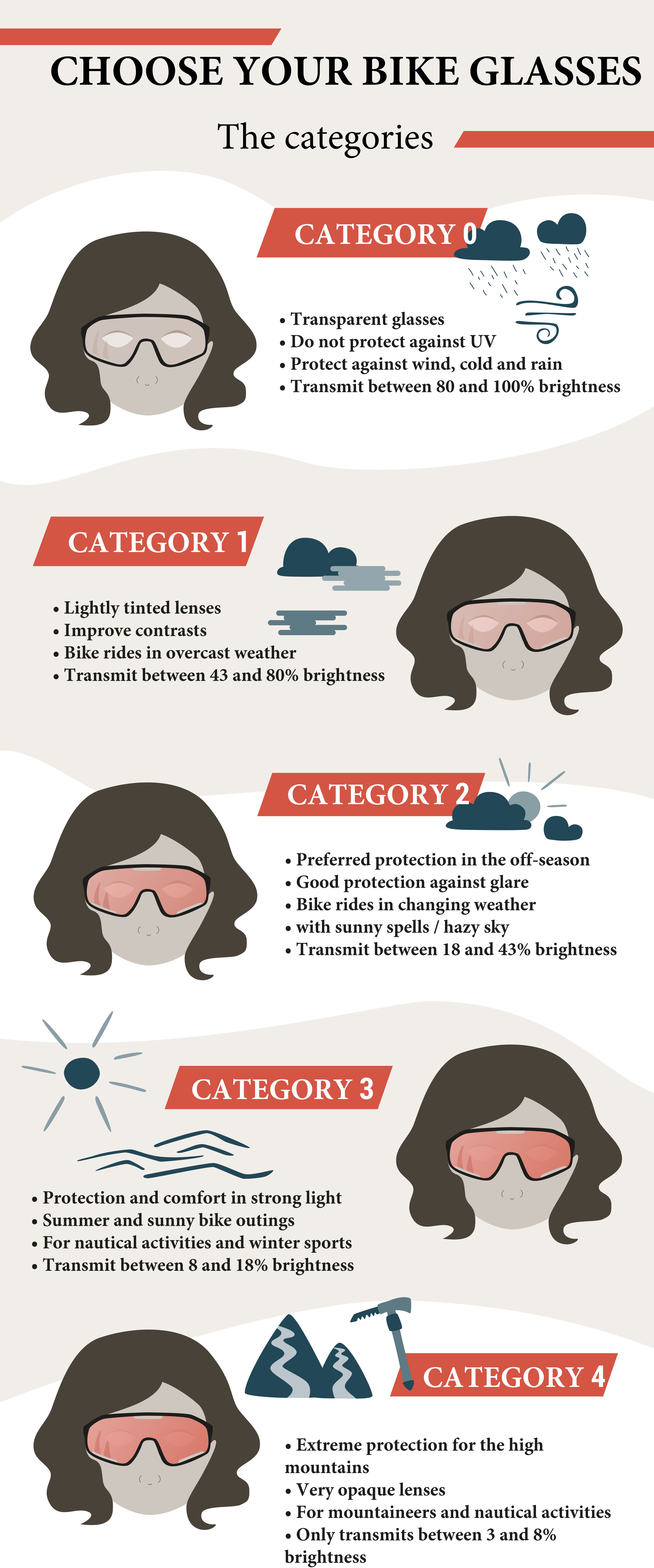
Before you make a decision, it's crucial to understand the technical details that define a great pair of cycling glasses. Beyond brand names and marketing, the specifications of the lens and the design of the frame are what truly impact your experience on the road or trail.
This checklist will guide you through the most important factors, from light transmission to frame construction. Are you ready to become an expert on what really matters in performance eyewear?
Demystifying Lens Specs: VLT, Tints, and Materials
The heart of any cycling glasses is the lens itself. Its material composition, tint, and how it handles light are paramount. Understanding these specs will empower you to look past the hype and evaluate the real-world performance you're paying for.
What does VLT mean in sunglasses? Understanding Categories 0-3
What does VLT mean in sunglasses? It stands for Visible Light Transmission, indicating how much light the lens allows to pass through to your eye. This is measured in categories:
- Category 0: 80-100% VLT (Clear or very light tint for night or overcast days).
- Category 1: 43-80% VLT (Slight tint for low light and cloudy conditions).
- Category 2: 18-43% VLT (Medium tint for general, moderate sunshine).
- Category 3: 8-18% VLT (Dark tint for bright, sunny conditions).
Photochromic lenses are remarkable because they can transition across these categories, often from 1 to 3. This versatility is a key factor influencing the photochromic lenses price, as one lens does the work of several.
NXT Photochromic Lens Review: Why material quality matters for clarity and durability
Not all lens materials are created equal. An NXT photochromic lens review consistently highlights its superiority. Originally developed for military helicopter windshields, NXT (Trivex) is a polymer that offers unparalleled optical clarity, impact resistance, and lightweight properties.
While polycarbonate is common, NXT provides sharper vision with less distortion. This premium material is a significant contributor to the cost of high-end adaptive eyewear, but for those who demand the best in clarity and durability, the investment is justified.
Frameless vs. Full-Frame Cycling Glasses: A Cyclist's Dilemma
The frame design is more than just an aesthetic choice; it directly affects your field of view, weight, and the durability of the glasses. Do you prioritize an unobstructed view or maximum protection?
Frameless Benefits: Uninterrupted view and lower weight
Frameless cycling glasses offer a completely uninterrupted field of vision. This is especially beneficial for road cyclists in an aggressive riding position, as the top of the frame won't block your view when looking up the road.
Their minimalist design also results in a significantly lower weight, enhancing comfort on long rides. This style prioritizes pure performance and an airy, almost-not-there feel.
Full-Frame Benefits: Superior durability and element protection
On the other hand, full-frame glasses provide a robust structure that encircles the entire lens. This offers superior durability, protecting the lens edges from damage if dropped.
The full frame also provides better protection from wind, dust, and debris, making it a popular choice for mountain biking and gravel riding where conditions can be unpredictable.
Essential Features: UV Protection, Fit, and Included Extras
Beyond the core components, several other features can make or break your experience. These details often separate a good pair of glasses from a great one and can add significant value to your purchase.
The Non-Negotiable: Verifying 100% UV protection claims
This is the most critical safety feature. Always verify that the glasses offer 100% UV protection, often labeled as UV400. This specification blocks all harmful UVA and UVB rays.
Wearing dark tinted lenses without proper UV protection is more dangerous than wearing no sunglasses at all, as it causes your pupils to dilate and let in more harmful radiation. Even options with a low photochromic lenses price must meet this standard.
The Value Add: Why a cycling glasses with clear lens included is a major bonus
While photochromic lenses are incredibly versatile, having a cycling glasses with clear lens included is a fantastic bonus. A dedicated clear lens is perfect for night rides or the darkest, stormiest days where even the lightest tint of an adaptive lens isn't ideal.
Finding a package that includes an extra lens can represent significant savings over buying one separately. To find the best value, it's wise to browse a comprehensive selection to compare different bundles and see how they affect the overall photochromic lenses price, ensuring you get the most versatile package for your money.
【The Final Verdict: Finding Your Perfect Photochromic Match】
Choosing the right photochromic cycling glasses ultimately comes down to a clear-eyed assessment of your specific needs, typical riding environments, and budget. As we've explored, the technology offers undeniable convenience, creating a single-lens solution for rides that span from dawn to dusk. This adaptability is the core value proposition, eliminating the need to carry spare lenses and ensuring you're never caught with the wrong tint.
However, this convenience must be weighed against key performance factors. The primary considerations are:
- Transition Speed: Traditional chemical lenses offer great value but come with a noticeable lag (30-90 seconds), which can be a safety concern in rapidly changing light, such as entering a tunnel. In contrast, advanced electronic lenses provide instantaneous shifts but at a significantly higher cost.
- Price Tiers: The market is diverse. You can find excellent budget-friendly options like the Van Rysel ROADR 900 that deliver solid performance for general use. In the premium tier, brands like Oakley and Spatz offer superior optical clarity, faster transitions, and advanced materials like NXT. At the pinnacle, electronic models like the Out Of Bot 2 represent the future of eyewear, albeit with a price tag to match.
- Essential Features: Beyond the adaptive tech, remember the fundamentals. Always confirm 100% UV400 protection. Consider your field-of-view needs when choosing between frameless and full-frame designs. Finally, evaluate lens specifications like the VLT range to ensure they match your typical low-light conditions.
By using this guide, you can move beyond marketing claims and analyze the features that truly matter. Whether you're a daily commuter looking for a practical solution or a competitive cyclist demanding peak performance, there is a photochromic lens designed for you. Armed with this knowledge, you are now fully equipped to compare models, understand their value, and select the perfect pair of light-adjusting glasses for your next adventure.
``` MjAyNTA3MjYyMTQ4MDk 当前显示MjAyNTA3MjYyMTQ4MDk。

评论
发表评论